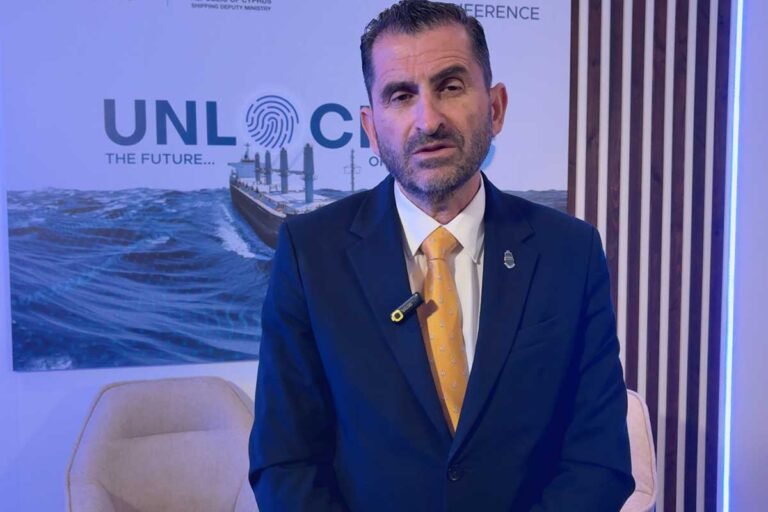
As Cyprus prepares to host Maritime Cyprus 2025, the Cyprus Shipping Chamber underscores the critical role of collaboration, innovation, and resilience in steering the industry through an era of unprecedented change. Representing one of the world’s most respected maritime clusters, the Chamber highlights key priorities: ensuring globally aligned and practical decarbonisation policies, strengthening Cyprus’s competitiveness through digitalisation and green incentives, safeguarding seafarers amid geopolitical instability, and investing in human capital to future-proof the sector. With shipping contributing around 7% to Cyprus’s GDP and managing more than 4% of the global fleet, the Chamber envisions Cyprus not just as a shipping hub, but as a forward-looking leader driving sustainable growth and shaping the future of global trade.
As we approach Maritime Cyprus 2025, what are the key themes or strategic priorities the Cyprus Shipping Chamber is focusing on this year?
As we move toward Maritime Cyprus 2025, the Chamber’s strategic focus centres on constructive cooperation, both locally and internationally towards safeguarding the industry through sustainable and realistic policymaking. Building on the proven success of Cyprus Shipping, we continue working closely with the Shipping Deputy Ministry to enhance services to the shipping industry, further strengthening Cyprus’ competitive advantages as a reputable global maritime hub.
A critical issue for us this year is the climate crisis, and we remain committed to pushing for globally aligned, practical environmental regulations, rather than fragmented regional measures that may hinder the sector’s effectiveness and competitiveness.
Equally pressing are the growing geopolitical tensions, which have caused and threatening to cause even more serious disruptions to shipping routes and operations worldwide. The Chamber is actively engaged through our participation at the International Chamber of Shipping (ICS) and the European Community Shipowners’ Associations (ECSA) in advocating for diplomatic solutions and de-escalation efforts, ensuring stability and safe passage for global maritime trade.
This context sets the stage for the Panel Discussion the Chamber is organising during the first day of the Maritime Cyprus Conference, which will directly address these disruptions. The discussion will focus on how the industry is navigating this new era of constant change, shaped by decarbonisation, geopolitical disruptions and evolving regulatory frameworks.
How would you assess the current state of the Cypriot shipping industry, and what competitive advantages does Cyprus maintain in the global maritime landscape?
The Cyprus Shipping Industry remains a vital pillar of the national economy driving economic activity, supporting society and enabling trade by transporting over 98% of the country’s raw materials and essential goods. Despite ongoing global challenges, it continues to be one of the most robust and dynamic sectors, contributing around 7% to Cyprus’s GDP. Cyprus shipping also maintains a strong international presence, hosting a leading merchant fleet both in Europe and worldwide. Also over 4% of the global fleet is managed from Cyprus and more than 20% of the world’s third-party ship management activity is carried out by companies based in Cyprus.
Among its core advantages is Cyprus’s EU-approved, transparent and competitive Tonnage Tax System, which applies to shipowners, charterers and ship managers, offering long-term fiscal stability. The country also provides high-quality maritime services, supported by a responsive and collaborative regulatory framework built on a strong public-private partnership. Our Association also plays a key role in representing and coordinating industry interests, while the local workforce is professional, multilingual and well-suited to the global nature of the sector. Together, these elements form a competitive and attractive shipping cluster that continues to draw international investment, trust and enhance Cyprus’s overall image on the world stage.
In your view, what are the main challenges facing global shipping today, and how can Cyprus contribute to tackling them?
The global Shipping Industry today faces a complex set of challenges, primarily driven by geopolitical tensions, regulatory developments and the urgent need for decarbonisation and digital innovation. The industry is under increasing pressure to adapt swiftly to environmental regulations, enhance cyber resilience and maintain safe and efficient supply chains amidst growing uncertainty.
Cyprus, as a well-established and respected shipping centre, is well-positioned to support global efforts by offering a stable, business-friendly framework, investing in digital infrastructure and promoting green shipping initiatives.
The Cyprus Shipping Chamber remains committed to working closely with the Shipping Deputy Ministry and all relevant authorities to address these priorities and contribute tangibly to the sustainable growth of global shipping.
Decarbonization remains a pressing issue in the maritime sector. How is the Cyprus shipping community responding to the IMO’s updated emission targets and the push for greener shipping?
The Cyprus Shipping Industry acknowledges the significance of the recent developments at IMO MEPC 83, particularly the agreement of a mid-term measure aimed at reducing greenhouse gas emissions. This milestone marks a pivotal moment for global shipping, positioning our industry as the first to commit to binding international climate targets for 2050.
While this progress is encouraging, we are mindful of the challenges ahead, especially when it comes to implementing these measures across a diverse and complex global fleet. The interaction between international commitments and overlapping regional regulations, such as those introduced by the European Union, adds another layer of complexity. That is why the Chamber, in close coordination with the European Shipowners|European Community Shipowners’ Associations (ECSA), continues to advocate for regulatory alignment, urging the EU to stand by its promise to phase out regional measures once the IMO’s global framework is adopted.
Our approach is rooted in the belief that a unified and realistic transition is the only way to achieve meaningful decarbonisation, one that supports innovation while safeguarding the viability of international shipping.
What initiatives or incentives has Cyprus implemented to attract more shipowners and maritime companies to its registry and shipping hub?
Cyprus has taken concrete steps to further enhance its image as an international shipping centre and attract more shipowners and maritime companies to its flag and country. An important step in this direction has been the establishment of the “One-Stop Shipping Centre” at the Shipping Deputy Ministry. This dedicated “Fast Track Service” significantly simplifies administrative processes by offering streamlined, efficient services under one roof, an approach highly needed by shipping companies seeking speed and reliability.
In 2024, Cyprus also introduced a new Green Incentives Programme, created to reward vessels that effectively reduce their greenhouse gas emissions. The programme offers tonnage tax reductions for ships that demonstrate superior environmental performance, thereby encouraging and recognising investments in cleaner technologies and sustainable operations.
In parallel, the Shipping Deputy Ministry has undertaken targeted global outreach efforts, actively engaging with shipowners and shipping companies through strategic meetings across key maritime regions to promote the Cyprus Registry and highlight the advantages of the Cyprus shipping cluster.
Together these initiatives reflect a proactive and modernised approach by Cyprus to further strengthen the country’s position as a leading shipping hub.
How important is digitalization and smart shipping to the future of Cyprus’s maritime sector, and what steps are being taken in that direction?
The future of Shipping is undoubtedly digital. The industry is undergoing a technological transformation that is already delivering significant benefits in terms of sustainability, operational efficiency and safety. As digitalisation and automation continue to reshape shipping operations, they offer great opportunities but also introduce new challenges, particularly in the realm of cybersecurity.
Recognising these developments, the Cyprus Shipping Industry is actively preparing to embrace new technologies by aligning digital strategies with broader business objectives. This includes investing in staff training and upskilling to ensure a workforce that is capable, adaptable and ready to navigate the demands of a rapidly evolving digital landscape.
From the Chamber’s perspective, we have long acknowledged the importance of digital readiness. Through our Digitalisation Committee, composed of our Member-companies experts, we actively monitor emerging technologies, automation trends and potential threats. This Committee plays a vital role in discussing and advising our Member-companies on how to adopt new digital solutions that can enhance efficiency, safety and environmental performance.
Moreover, we are closely engaged in both national and international forums, particularly on cybersecurity to share knowledge and help shape policies that will protect the sector from rising digital threats. Addressing cyber risk is essential as ships and shore-based operations become increasingly connected.
In essence, digitalisation is not just a technological shift it is a strategic imperative. Cyprus is taking the steps to ensure it remains at the forefront of this transformation.
The shipping industry is heavily influenced by geopolitics and trade shifts. How resilient is the Cypriot maritime sector to global disruptions such as regional conflicts or economic instability?
The Cyprus Shipping Industry has consistently demonstrated strong resilience in the face of global disruptions. A prime example was in 2020, during the COVID-19 pandemic, when shipping played a critical role in maintaining the flow of essential goods, energy, food, medicine, at a time when much of the world came to a standstill. This reaffirmed not only the sector’s resilience but also its indispensable role in global economic stability and prosperity.
Today, with renewed geopolitical tensions, particularly in the Middle East, the sector continues to operate under challenging conditions. We monitor these developments closely, always advocating for peaceful resolution through diplomacy, as stability is vital for the uninterrupted movement of trade. While such conflicts inevitably affect shipping routes, operational costs and insurance rates, Cyprus remains adaptive and committed to ensuring continuity of services.
It is precisely in these uncertain times that we must collectively work to safeguard shipping and protect our seafarers, who are on the frontlines, while promoting coordinated international responses to ensure the sustainability and security of maritime trade.
In what ways does the Cyprus Shipping Chamber collaborate with European and international organizations to promote the interests of the maritime community?
The Cyprus Shipping Chamber has long been an active and respected voice in both European and international maritime affairs. It has been a member of the International Chamber of Shipping (ICS) since 1993 and of the European Community Shipowners’ Associations (ECSA) since 2004. Through these memberships the Chamber plays a vital role in shaping global and regional maritime policies by participating in high-level policy dialogues, submitting expert input on regulatory proposals and advocating for practical frameworks that support the sustainable growth of the industry.
In addition to its work within ICS and ECSA, the Chamber actively contributes to joint research and innovation projects that address the evolving challenges facing the sector, including decarbonisation, digitalisation, and maritime safety. It also regularly participates in sessions of the International Maritime Organization (IMO) as part of the official delegation of the Shipping Deputy Ministry of Cyprus, offering technical and policy expertise and supporting the advancement of Cyprus’s positions on key maritime issues.
How do you see the role of human capital evolving in Cyprus’s maritime sector, especially in terms of maritime education, diversity, and crewing strategies?
Our people are our greatest strength. As highlighted in the recent Draghi report on European competitiveness, labour shortages are increasingly limiting economic growth across the continent. The Shipping Industry is no exception and addressing this challenge is crucial for ensuring the sector’s long-term resilience and global competitiveness.
Recognising this early on, the Cyprus Shipping Chamber has for over three decades, been a strong advocate for investing in maritime education and promoting careers in shipping. From primary school through to higher education, the Chamber has spearheaded numerous initiatives to inspire young people to join the maritime sector. Our flagship “Adopt a Ship” Programme, developed in cooperation with CYMEPA, has even been replicated internationally, reflecting its success in connecting students with real-life shipping operations. This is further complemented by presentations in secondary schools, participation in career fairs and consistent support for cadets and maritime graduates as they navigate their entry into the industry.
The Chamber is also actively contributing to the development of a sustainable skills strategy aimed at not only growing the pool of maritime professionals but also strengthening the safety and capacity of the industry. Future-proofing skills has become essential as Cyprus transitions into the era of smart shipping. Crucially the industry is also investing in the upskilling of their people, ensuring employees are equipped to meet the demands of emerging technologies and to help drive the industry forward.
Looking ahead to the next decade, what is your vision for Cyprus as a shipping nation, and what legacy do you hope Maritime Cyprus 2025 will leave behind?
My vision is for Cyprus to solidify its position as one of the world’s leading shipping hubs by becoming a pioneer in digital transformation, innovation and green maritime practices. Through the full digitalisation and automation of maritime services, we can enhance efficiency, transparency and competitiveness across the sector. Parallel to this, strategic investment in upgrading port and maritime infrastructure, as well as expanding high-value services, will create an even more attractive ecosystem for international shipowners and operators. Cyprus is also well-positioned to play a key role in the broader Eastern Mediterranean energy landscape, particularly in the sustainable development of its natural gas resources. At the same time, the country must remain at the forefront of global efforts to decarbonise shipping, not only by supporting and adopting alternative fuels and clean technologies, but by promoting global policies that enable a fair, effective and inclusive green transition for the entire industry.
As for the Maritime Cyprus Conference, I look forward to it continuing to serve as a leading global event that brings together high-calibre speakers and delegates. Most importantly, it should remain a vital platform that connects policymakers and the industry, enabling meaningful dialogue on the future of Cyprus and global shipping. I hope the 2025 edition will leave behind a legacy of fostering sustainable solutions to the evolving challenges and opportunities in our sector.
* Andreas Neophytou Is President Of Cyprus Shipping Chamber