

OCEANKING has been a key player in the Greek maritime sector for over three decades. How do you see your role evolving in the wider Eastern Mediterranean region, particularly in Cyprus?
Since its inception, Oceanking has closely followed the market trends in the maritime sector. We consistently research and evaluate available marine technologies in order to provide our customers with innovative, sustainable solutions not only to meet their operational needs, but also to address new market developments and upcoming regulations.
Over the past 35 years, we have accumulated extensive experience and deep technical know-how on maritime technology by assembling a team with strong technical expertise and market insight, and by establishing strategic partnerships with leading manufacturers. With a thorough understanding of available technologies and their operational contexts, we have evolved into trusted technology consultants, well-positioned to support our customers with strategic insight and practical solutions.
Beyond providing technology, we aim to deliver comprehensive lifecycle support services designed to maximize system performance, reliability, and value. In recent years, we have placed particular emphasis on strengthening our after-sales capabilities to enhance our contribution to the operational continuity for our clients. In addition to providing integrated after-sales services—such as spare parts, system retrofits and upgrades—we have established a dedicated technical services team, Oceanking Engineering, offering commissioning, training, maintenance, remote troubleshooting and onboard attendance across the Eastern Mediterranean region.
Maritime Cyprus 2025 places a strong emphasis on decarbonization and innovation. How is OCEANKING contributing to the industry’s green transition?
To support our customers in their decarbonization journey, we have established strategic partnerships with leading equipment manufacturers, enabling the exchange of knowledge, technical know-how, and specialized skills. Taking a holistic approach, we evaluate available solutions based on vessel type and operational profile, with the goal of delivering innovative, turnkey solutions. Our services include project coordination, installation supervision, pre-commissioning, and full lifecycle support.
Leveraging proven technologies and extensive industry experience, we offer a one-stop shop for shipping decarbonization, providing customized solutions across a wide range of applications, including:
Electric and Hybrid Propulsion Systems
Wind-Assisted Ship Propulsion Technologies
Onboard Carbon Capture Systems
Onshore Power Supply and Shaft Generator
Shaft Power Limitation (ShaPoLi) and Data Acquisition Systems
Heat Recovery Systems
Propeller Efficiency Optimization and Energy Saving Devices (ESDs)
Equipment and Systems for Dual-Fuel (DF) Vessels
Digital transformation is reshaping the shipping industry. How is OCEANKING integrating smart technologies into its portfolio and services?
Since 2018, we have been actively defining our role in the digitalization of the shipping industry, driven by our belief that AI can play a transformative role in optimizing operational strategies, enabling our customers to make smarter decisions, improve efficiency, and drive sustainable growth. After carefully evaluating various approaches to add value, we have successfully integrated digitalization solutions into our portfolio of services. Our approach lies in collecting and delivering high-quality data, which serves as the foundation for informed decision-making, improved operational efficiency, and optimized fleet performance. While an increasing number of companies rely on advanced calculation models, these models are only as effective as the data they use. In cooperation with our partners, we ensure that our clients have access to accurate, reliable data—empowering their digital tools to deliver meaningful insights.
What are the biggest challenges your clients are facing today in terms of regulatory compliance and environmental performance?
Today, shipowners are navigating a complex landscape as they work to decarbonize their operations. One of the primary challenges lies in the lack of regulatory clarity and consistency, with not fully aligned requirements from international bodies, such as the IMO, and regional authorities, like the EU, creating uncertainty in compliance planning. At the same time, evaluating the performance, availability, and long-term viability of alternative fuels—such as LNG, methanol, ammonia, and biofuels—adds further complexity, especially as infrastructure and global supply chains are still developing. In addition, most compliance solutions require significant capital investment, making it difficult for many operators to adopt them without access to relevant funding or favourable financing options.
What specific technologies or solutions will you be highlighting during Maritime Cyprus 2025?
Cyprus continues to strengthen its position as a major hub for ship management, hosting the largest third-party ship management centre in Europe and ranking among the top three globally. Leveraging its strategic location and advanced infrastructure, Cyprus is also emerging as a prominent hub for maritime innovation and technology.
One of the key challenges for existing vessels is evaluating a wide range of technologies and applications to reduce fuel consumption and improve energy efficiency, in order to meet environmental regulations. Therefore, our focus at Maritime Cyprus 2025 will be on practical decarbonization solutions that are well-suited to the existing global fleet. These include:
Wind-Assisted Propulsion Systems
Onshore Power Supply (OPS)
Data Acquisition Systems
Efficiency Propellers and Energy-Saving Devices (ESDs)
In addition to showcasing the above technologies, we would like to provide specific results from sea trials and independent third-party reports, in order to provide the shipping community in Cyprus with reliable, real application data to evaluate and build confidence in the performance of these technologies. Access to trusted information on potential fuel and energy savings enables shipowners and operators to develop a solid business case when considering the adoption of specific solutions as part of their decarbonization strategy.
What advice would you give to shipowners and operators preparing for the IMO 2030/2050 goals?
While inconsistencies remain between international and regional regulations, the overall regulatory direction is clear—decarbonization is no longer optional; therefore, shipowners need to plan their strategy. The availability and cost of alternative fuels might still be uncertain; however, today there are numerous onboard applications of decarbonization technologies aiming at fuel and energy efficiency that have already proven their effectiveness. Shipowners now have the opportunity to leverage analytical tools and validated performance data to shape their decarbonization journey—developing and implementing sustainable strategies that not only ensure long-term regulatory compliance and operational efficiency, but also secure their competitiveness in the evolving maritime landscape.
Finally, what message would you like to share with the global maritime community attending this year’s conference in Limassol?
In uncertain times, the global shipping community needs trusted partners who can provide reliable solutions to help navigate the challenges ahead. Since 1989, Oceanking has stood alongside shipowners and operators, building strong, lasting relationships rooted in trust, reliability, and support. We assist our customers by offering a clear overview of available technologies, their performance, and their suitability for different vessel types and operating routes—enabling informed decisions that align with operational goals, regulatory requirements and commercial strategy. Beyond the initial implementation, we aim to support our customers throughout the entire lifecycle of their vessels. This close partnership remains at the core of everything we do, and we are committed to continuing this approach well into the future.
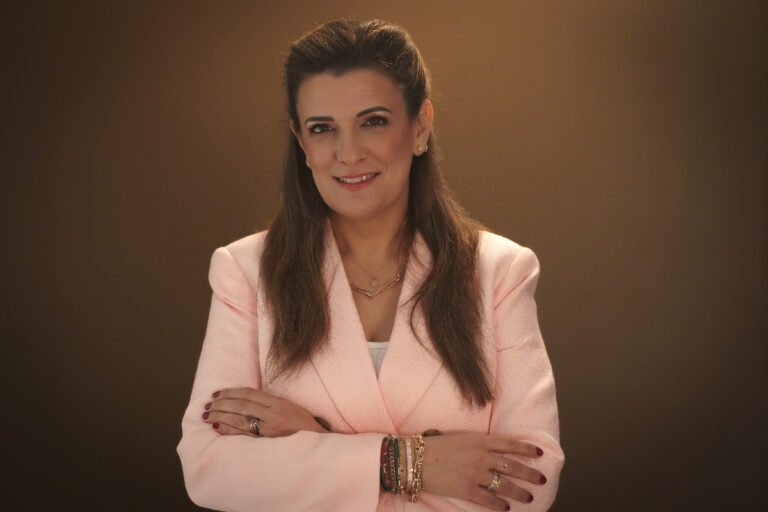
*General Manager at Oceanking s.a