The global maritime sector is entering a decisive period shaped by regulatory uncertainty, geopolitical instability and the realities of the energy transition. These forces are converging in ways that demand clarity, leadership and a pragmatic understanding of how shipping can continue to fulfil its essential role in the world economy. At the same time, the industry must prepare for the future without losing sight of the constraints that currently define the energy landscape.
The Regulatory Future
The decision by Member States at the International Maritime Organization (IMO) to postpone the adoption of the Net Zero Framework has created immediate questions for the investment climate. Our industry has been ready and willing to embrace practical and pragmatic regulation in the pursuit of the IMO net-zero ambitions, which is why the International Chamber of Shipping made clear proposals for a simple fund and reward system. Unfortunately, this was not the system that was on the table in October. This delay does not change the daily operations of global shipping, yet it casts a long shadow over long term planning. Ships have an operational life of fifteen years or more and owners must take decisions today that will shape fleets well into the 2040s and beyond. The absence of regulatory clarity makes it more difficult to commit capital to new designs, engines and fuel arrangements.
There is also the growing risk of regulatory fragmentation, particularly between the global framework developed by the International Maritime Organization and regional measures such as the European Union Emissions Trading System. Fragmentation imposes complexity and cost on an already challenging transition. The maritime sector needs a coherent global regulatory structure if it is to move forward at scale. This is why we remain committed to working with the International Maritime Organization. It is the only institution capable of providing uniform rules for a global industry. A global mechanism is essential in order to maintain an even playing field and give certainty to investors. We must now see that ambition translated into practical and timely regulation.
Geopolitical Turbulence
The geopolitical environment remains highly unsettled. Conflicts in key regions have had an operational impact on major trade routes, particularly through increased voyage times, higher insurance premiums and navigational risks. The return of protectionist measures in several economies has also reshaped patterns of global trade. Shipping companies must therefore prepare for a year in which operational flexibility will be indispensable. But this is nothing new for our industry, which has constantly proven that we will perform our critical role under any circumstances.
Diversification of routing options, closer coordination with charterers and real time monitoring of regional risks are likely to remain standard practice. The resilience shown by the sector through recent crises must continue. Maritime transport has a unique responsibility as the backbone of global commerce. Our task is to maintain stability wherever possible, even when external conditions grow more unpredictable.
The Decarbonisation Reality
The ambition to decarbonise remains strong, yet the availability of fuels that meet the requirements of a net zero pathway is extremely limited. What little exists is expensive and insufficient to support fleet wide adoption. Current capability falls short of stated ambition, and it is vital that we acknowledge this reality while continuing to pursue every feasible pathway.
The industry is fully aware that shipping represents only a small proportion of global fuel consumption. In absolute terms maritime transport accounts for roughly four per cent of liquid fuel demand. Since the sector is not a major consumer, the energy transition cannot be planned around shipping alone. Instead, it must be understood within the wider context of how future fuels will be produced, traded and transported for all sectors of the global economy.
This is where the Clean Energy Marine (CEM) Hubs initiative plays an essential role. CEM-Hubs is a cross sector collaborative platform that connects governments’ energy ministries, fuel producers, shipowners, and port authorities. Its purpose is to accelerate the development of infrastructure near ports and to reduce the investment risks associated with producing and transporting future fuels. What distinguishes this initiative is its focus on the entire energy maritime value chain rather than on shipping in isolation. If the world can secure the production and movement of the ninety-six per cent of future fuels required by non-maritime sectors, then the four per cent required by shipping will naturally be supported by the same infrastructure. This also presents the real opportunity for shipping, as these future fuels are a commodity that will need to be transported by ship from where they are produced to where they are needed. This integrated approach reduces cost, increases efficiency and ensures that maritime transport remains an enabler of the wider global energy transition. Following the lead of Greece last year, China and Malta joined the CEM-Hubs initiative this year, with South Africa soon to follow.
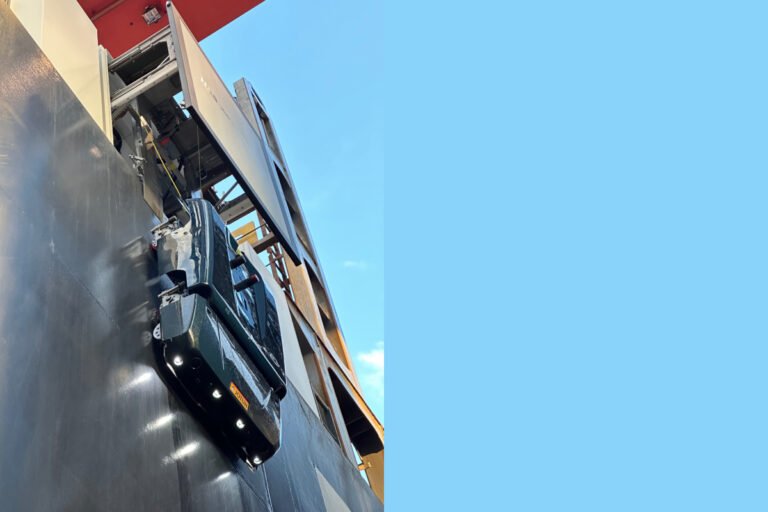
Alongside long-term solutions, transitional technologies must be advanced. Efficiency improvements remain the most immediate method of reducing emissions. Vessel optimisation, digital tools, and technical upgrades like hull-air lubrication can deliver meaningful reductions today. In addition, onboard carbon capture and storage has emerged as a potential bridging option. Although it requires supportive policy and further development of offloading and storage infrastructure, onboard capture enables reductions while allowing vessels to operate with existing fuel systems until future alternatives become available at scale.
Sailing Forward
Shipping continues to provide the essential service of moving global trade and it will also be responsible for transporting much of the world’s future energy. To fulfil this role effectively, the industry needs regulatory clarity, geopolitical awareness and pragmatic decarbonisation pathways. Through collective effort and structured collaboration, the maritime sector can support the global economy during a period of profound transition while preparing itself for the decades ahead.
- Chairman, International Chamber of Shipping