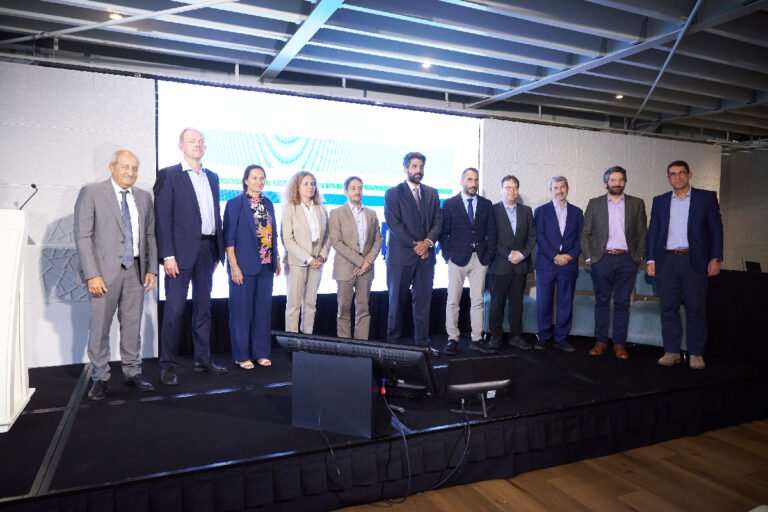
For the third consecutive year, Greece will assume the Presidency of the European Shortsea Network (ESN), following a unanimous decision by the Network’s members. The new Presidency will run from January through December 2027, following the two-year term Greece is currently serving. This is the first time since the ESN was established in 2000 that a member country has held the Presidency for three years.
The renewal of Greece’s term will coincide, during the second half of 2027, with Greece’s Presidency of the Council of the European Union. This alignment offers an opportunity for cooperation and for strengthening efforts to advance issues of shared interest on the European agenda.
ESN’s priorities for the new term
- Strengthening the role of shortsea shipping at European level, emphasising its position as a vital link in intermodal transport. This primarily requires safeguarding the competitiveness and resilience of European shipping, as well as ensuring the safety of maritime routes, vessels and seafarers against contemporary geopolitical and hybrid threats, including those affecting the Black Sea region. ESN also considers it essential not to extend the EU Emissions Trading System (EU ETS) to vessels below 5,000 GT. Such an extension would disproportionately affect small and medium-sized businesses, raise transport costs, undermine the viability of ferry services and island connectivity, and risk shifting cargo back to road transport. Simplifying the regulatory framework by reducing bureaucracy and fully aligning European rules, including the EU ETS and FuelEU Maritime, with International Maritime Organization (IMO) standards is also regarded as necessary to avoid overlaps and double charging, allowing the industry to invest meaningfully in the green transition.
- Enhancing active participation in member states’ national shortsea shipping policies.
- Providing broad, evidence-based information to relevant authorities and institutions about European decisions.
- Supporting the implementation of European transport policies that strengthen the competitiveness and resilience of shortsea shipping across all member states.
- Maintaining close coordination and continuous consultation with European decision-making centres through the ESN.