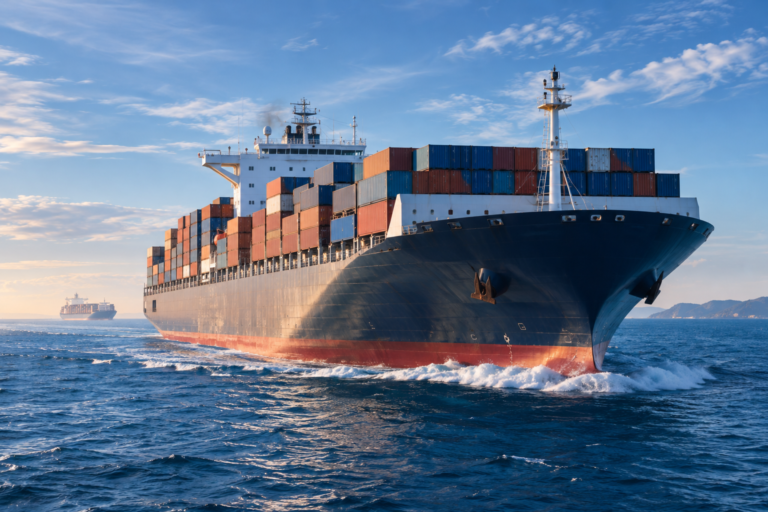
Investment in dual-fuel container ships and vehicle carriers is opening a significant potential market for renewable marine fuels, according to a World Shipping Council (WSC) report released on 25 November 2026.
By around 2030, vessels in service or on order capable of running on renewable fuels are expected to represent more than 20% of liner shipping’s energy requirements. This potential does not, however, guarantee actual renewable fuel consumption.
The report identifies opportunities to expand biofuel and synthetic e-fuel production and bunkering across major regions worldwide, building on existing infrastructure, fuel industries and renewable electricity resources.
WSC President and CEO Joe Kramek stressed that commercially viable conditions and global regulations addressing the cost difference between conventional and renewable fuels are essential to unlock investment and achieve emissions reductions.
Ahead of IMO’s MEPC 85 meeting, scheduled for 30 November–3 December, WSC is advocating binding international measures, consistent enforcement and incentives for zero- and near-zero-emission fuels.
Read the WSC report | Source: World Shipping Council
#WorldShippingCouncil #RenewableMarineFuels #DualFuel #Decarbonisation #LinerShipping #IMO #MEPC85 #Shipping