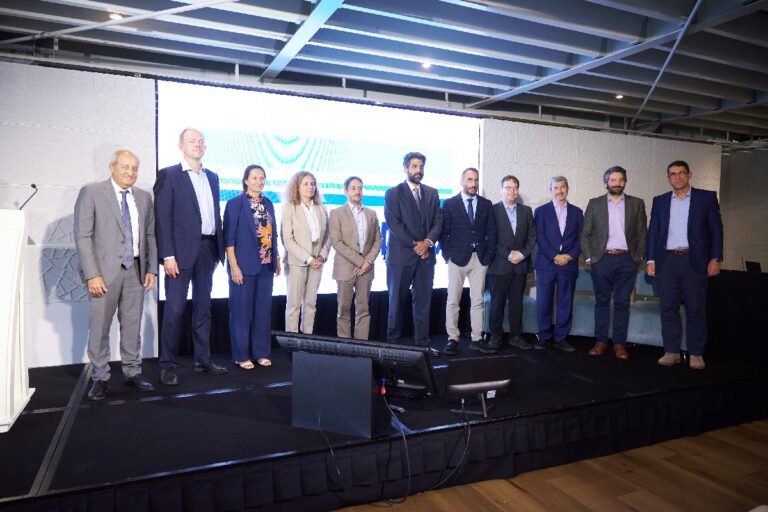



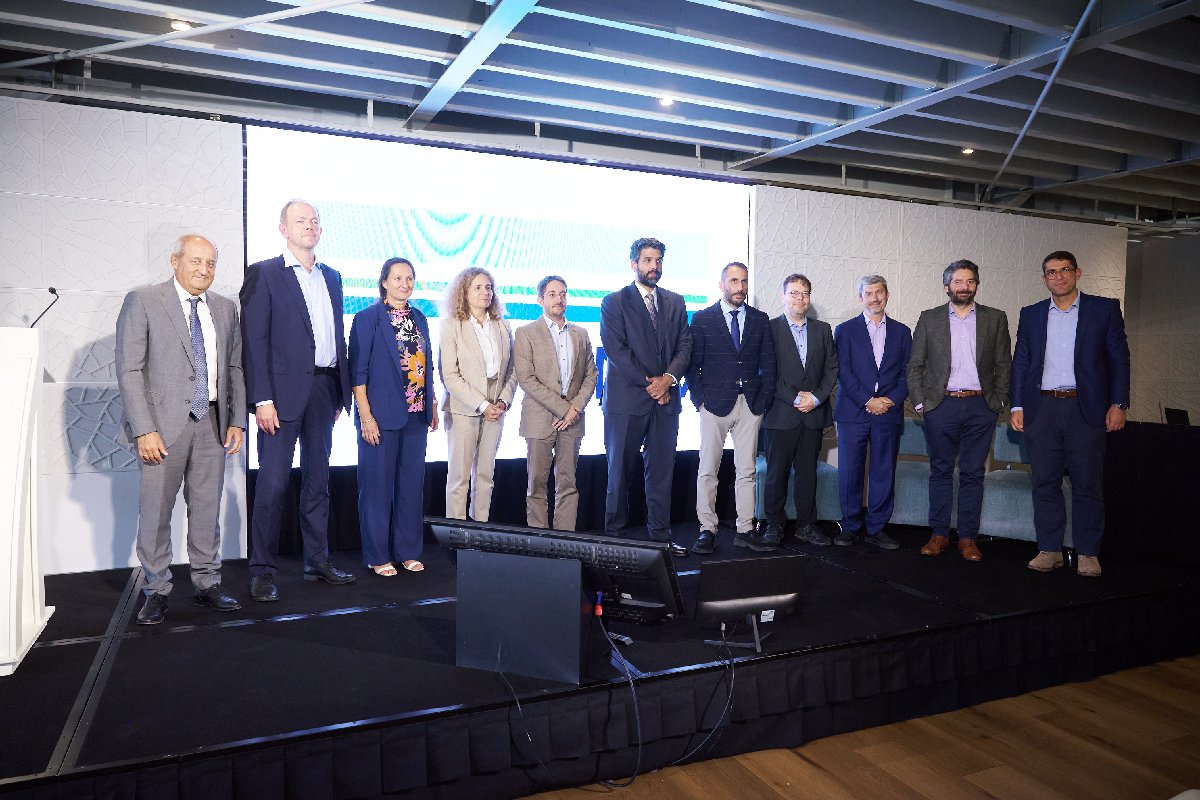
Maritime decarbonization will depend on the industry’s ability to verify performance, understand economics and scale solutions based on operational experience, according to participants at DNV’s 2nd Energy Efficiency & Technologies Forum in Athens.
The forum brought together shipowners, technology providers, academics and DNV experts to examine the practical readiness of energy-efficiency and decarbonization measures. Discussions focused on measured fuel savings, implementation challenges and the business case for hydrodynamic retrofits, wind-assisted propulsion, LNG and biomethane, shore power, emissions-data management, onboard carbon capture and nuclear propulsion.
Opening the forum, Jason Stefanatos, Global Decarbonization Director at DNV Maritime, emphasized the continued importance of energy efficiency in shipping’s transition:
“While alternative fuels will play a critical role in decarbonization, improving energy efficiency remains one of the most immediate and commercially attractive opportunities available to shipowners today. The challenge is to understand which solutions deliver measurable value under real operating conditions and how they can be implemented at scale.”
A recurring theme throughout the forum was the need to base investment decisions on measured operational performance rather than theoretical potential.
André Kauffeldt, Principal Engineer at DNV’s Ship Performance Center, presented findings from more than 180 bow-retrofit projects, while Katerina Prifti, HSQE Director/DPA/Vetting at Laskaridis Shipping, shared operational experience from the company’s evaluation of wind-assisted propulsion. The discussions highlighted how fuel savings and payback periods can vary significantly depending on vessel design, operating profile and trading pattern.
The economics of compliance also featured prominently. George Kriezis, Technical Director at Neptune Group of Companies, examined LNG and biomethane as part of long-term decarbonization strategies, highlighting the influence of fuel availability, lifecycle emissions and FuelEU Maritime compliance considerations on investment decisions and fleet economics.
Looking at other decarbonization measures, Lefteris Koukoulopoulos, Regional Decarbonization Specialist at DNV Maritime, discussed the readiness of shore power and the infrastructure challenges that continue to constrain wider adoption. While uptake is increasing in some vessel segments, access to shore-power connections remains limited in many ports.
Trusted and verified emissions data emerged as another key theme. Konstantinos Kordas, Performance Engineer at Navarone S.A., outlined the company’s fleet-level energy-efficiency strategy, while Vasileios Petousis of Seanergy Maritime Holdings, together with Mette Rønning Raabel and Lars Nyflot from DNV Maritime, highlighted the role of verified emissions data in supporting regulatory reporting, performance monitoring and operational decision-making.
The forum also explored technologies that remain at an earlier stage of adoption. Dimitris Koutsaftis, CCS Technical Product Manager at ERMA FIRST, and Chara Georgopoulou, Head of Maritime R&D and Advisory Greece at DNV Maritime, reviewed the opportunities and challenges associated with onboard carbon capture. Closing the event, Professor George Dimopoulos of the National Technical University of Athens examined the conditions under which nuclear propulsion could become relevant for selected shipping applications.
Lefteris Koukoulopoulos said after the forum: “Across the sessions, one conclusion was consistent: maritime decarbonization will not be delivered by a single fuel or technology. For shipowners, the immediate task is to establish an accurate performance baseline, select measures suited to each vessel and trade, test the less mature solutions, and verify results before moving from individual projects to fleet-wide implementation.”