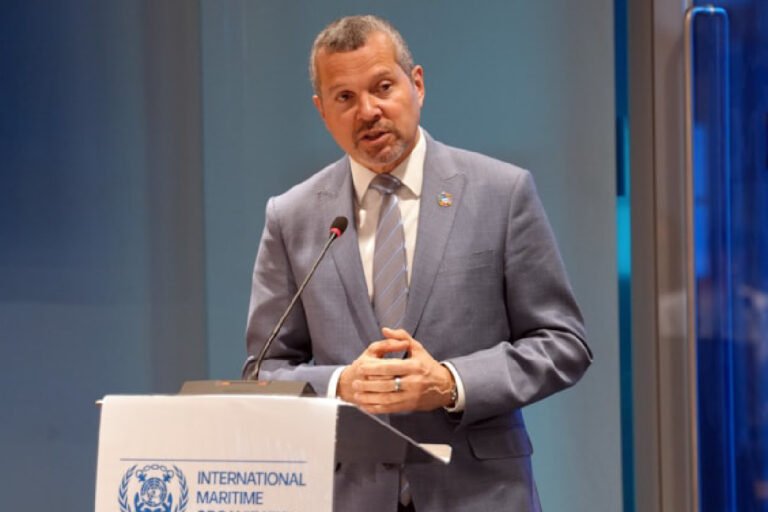
The recent decision at the IMO to postpone, for an entire year, the adoption of the Net-Zero Framework (NZF) represents a significant set- back—both for the Organization and for the global shipping industry. The postponement exacerbates regulatory uncertainty, disrupts established decarbonization timelines, and undermines confidence in the IMO’s ability to provide coherent global governance.
A thorough examination of how we arrived at this point, and what corrective steps might allow the IMO to regain its footing, is urgently needed. This is a multifaceted topic with regulatory, geopolitical and, technological implications to be analyzed.
REGULATORY FUTURE: IMPACT OF NZF POSTPONEMENT
The IMO MEPC ES.2 session’s decision to defer the vote on the Net-Zero Framework (NZF) for a full year reverberates far beyond procedural bureaucracy—it plunges the industry into a complex regulatory limbo at a moment when clarity is most needed. In the immediate term, this adjournment stifles both investor confidence and the sector’s ability to make strategic, long-term decisions.
Shipowners will likely postpone fleet renewal and retrofitting plans until regulatory details become clearer, resulting in delays to green investment and potentially slower progress toward decarbonization. One chief concern is the growing risk of regulatory fragmentation, especially between global and regional schemes. As the NZF timeline slips, major blocs like the European Union are forging ahead with the expansion of the EU Emissions Trading System (ETS) to the maritime sector. The EU ETS, already applying to voyages among EU ports and gradually broadening its scope, is likely to move further out of alignment with the IMO, especially if the NZF fails to materialize on a similar timetable.
Other regions such as the UK, China, and Turkey are signaling intent to establish their own schemes based on the EU model, further deepening the regulatory patchwork and posing significant compliance challenges for global operators.
Longer-term consequences include the risk that investment capital will concentrate in regions with more predictable climate finance mechanisms and carbon pricing, potentially leaving developing economies and major transshipment hubs at a disadvantage as they fall outside dominant regulatory and funding frameworks. The overall effect is a landscape rife with uncertainty, where shipowners and financiers must navigate multiple overlapping compliance and reporting systems, constantly reassessing risk and opportunity as future policy is debated.
A critical aspect is also the metric utilized by IMO to mandate compliance with its strategy, the GHG fuel intensity. It can be shown that the metric is proportional to the emission factor of the fuel utilized and inversely proportional to its Lower Calorific Value, i.e. totally independent of the mass of the fuel burned. Carbon intensity (e.g., grams of CO2e per transport work) is a useful metric for comparing efficiency across vessels, but on its own it is neither fair, nor just, nor environmentally sufficient—especially when used as the sole basis for compliance. Two ships can have identical
carbon intensity but very different total climate impacts. This is structurally misaligned with climate objectives, which depend on the total mass of emissions, not efficiency ratios.
Intensity metrics systematically treat ship types differently. Tankers and bulkers carrying dense cargoes tend to appear “efficient.” Container ships, ro-ros, PCTCs, and passenger ships often perform worse under intensity rules because their mission profiles inherently produce higher “transport work” denominators. Thus, carbon intensity is not a universal measure of “fairness” across ship types. Routes far from major markets (e.g., Pacific islands, Africa, South America) inherently involve long distances, often with low backhaul utilization. As a result, ships serving these regions appear “less efficient.” These regions rely on shipping for economic survival. A “fair and just” metric should not penalize countries because of geography. Intensity works better as an efficiency KPI, not as a regulatory compliance threshold; valuable for benchmarking, but dangerous when used as the primary compliance trigger.
Carbon intensity measures how efficiently you pollute—not how much you pollute. This is useful, but not sufficient. There is a strong argument that absolute emissions should play a central role again. Climate outcomes depend on total emissions. The atmosphere responds to tons of CO2e, not to ratios. If global shipping reduces intensity but increases total fleet activity, total emissions rise, which is exactly what is happening today. A system based on tons of CO2e emitted cannot be gamed by operational tricks. Based on transparent measurement, directly aligns with IMO’s 2030/2040/2050 climate objectives. Any effective MBM—levy or cap-and-trade—depends on quantifying tons of GHG. Intensity is orthogonal to MBMs; it cannot substitute for absolute emissions.
Many policy analysts argue that CII and GFI-based NZF frameworks fail to control total emissions, and therefore must be replaced by absolute measures. Even in the NZF debate, the carbon levy was the part that actually linked compliance to emitted tons. Without it, the NZF lost its environmental anchor. A regulatory architecture lacking mechanisms to cap or price total emissions cannot credibly align with Paris-consistent decarbonization trajectories.
GEOPOLITICAL TURBULENCE: SHIPPING OPERATIONS IN 2026
Amid escalating global tensions and trade protectionism, the postponement of the NZF adds another layer of complexity to route planning and operational stability in 2026. The industry faces increased exposure to risk across major chokepoints such as the Red Sea, Suez Canal, and Strait of Hormuz, as disruptions due to conflict or sanctions force carriers to rethink traditional lane deployments, often at significant financial and logistical cost. Shipping companies should respond by adopting more agile strategies. Operators are already expanding alternative service loops that bypass high-risk regions (e.g., Suez or Red Sea routes).
Ports in safe havens like Durban or Port Louis see rising traffic as shippers buffer lead times and mitigate exposure. Real-time tracking of emerging threats and insurance premiums is becoming essential. Companies must work closely with brokers to secure war risk coverage, renegotiate contract terms, and deploy capacity where trade is more predictable.
“China plus one” strategies are gaining ground, with importers routing cargo through multiple countries to avoid tariffs and minimize dependence on single-source nations. Accessing financing for new vessels or retrofits is increasingly contingent on demonstrating compliance with sustainability-linked standards and route-level risk management. Shipowners, especially those with fleets serving varied geographies, must weigh not only profitability but also operational and reputational resilience as they shift resources and align with changing regulatory and geopolitical realities.
DECARBONIZATION REALITY: TRANSITIONAL FUELS & TECHNOLOGIES FOR 2026
In the wake of regulatory uncertainty, the maritime sector’s decarbonization efforts hinge on which transitional fuels and scalable technologies can realistically gain traction in 2026. Key themes shaping adoption include infrastructure readiness, cost competitiveness, and compatibility with
existing ship designs. LNG remains the most established transitional fuel, favored for its relatively mature bunkering infrastructure and ability to lower CO2 emissions compared to traditional fuels. While new LNG-powered vessels are being delivered, their compliance window with emission targets is shrinking; LNG may become non-compliant by 2034–2039 under tightening standards. LNG’s attractiveness as a “transitional fuel” in maritime faces mounting risk as regulators target methane (a potent greenhouse gas). Older low-pressure dual-fuel engines can emit significant unburned methane (“methane slip”), potentially making their operators liable for additional emission penalties and loss of green credentials. The EU is including methane and nitrous oxide in its rules by 2026, and the IMO is considering similar mid-term measures. Owners may need to upgrade to low-slip, high-pressure engines or fit methane abatement technology, incurring significant retrofitting costs and potential operational downtime.
ESG-focused funds and banks increasingly require methane monitoring and mitigation as loan or investment conditions. Methanol if produced from natural gas, lifecycle emissions are only marginally better—or even worse—than conventional fuels. Green methanol (from biomass or renewable hydrogen) delivers large savings, but only if sustainable feedstocks and power are used. Regulatory approaches may not credit all methanol as “clean,” so origin and certification are critical. The order book for green methanol-fueled vessels is growing, but large scale commercial bunkering is hampered by limited supply and the need for significant cargo space trade-off due to low energy density. Methanol’s role as a bridge fuel depends on infrastructure upgrades and market incentives, both of which remain unclear. Waste-based marine biofuels, especially those derived from manure or landfill gas, can achieve net-negative lifecycle emissions (due to credits for avoided methane release from waste management).
Emissions savings range from 40% up to 160% compared to low-sulfur fuel oil, but only when using certified, sustainable feedstocks. Supply assurance and credibility of certification are pivotal under strict regulatory scrutiny. Green Ammonia offers a scalable pathway for deep-sea shipping, given its high energy density and ability to decarbonize long-haul fleets. First commercial installations are underway; demand will depend on regulatory and financial incentives, as well as safety systems for toxic handling. Hydrogen-based options, particularly those paired with renewable electricity, hold promise for long-term transition but face daunting scalability and infrastructure challenges. Shore power and electrification of ports may advance, but require substantial investment and clear regulatory support. To compensate for the lack of short-term regulatory clarity, the industry will need to play an
activist role: partnering with technology providers to accelerate pilot projects, championing investment in infrastructure in promising regions, and collaborating on standards to ensure cross-border interoperability. Additionally, industry associations and thought leaders should advocate for more rapid regulatory harmonization to prevent further regional fragmentation and secure climate finance that underpins innovation and development in less mature markets. Without imminent global mandates, banks and investors are hesitant to provide long-term debt or equity for green projects, raising required returns or delaying investment decisions. Lenders may demand shorter loan maturities and higher margins.Ports should pursue long-term, demand-stabilizing agreements with charterers and fuel suppliers to mitigate investor risk and accelerate infra-structure deployment. Proactively coordinate with local and national policymakers to offer as much regulatory clarity and incentive as possible.
Build infrastructure that can handle multiple fuels—LNG, ammonia, methanol, biofuels—making investments future-proof and scalable. Enable and highlight demonstration projects, offering early movers branding, partnership, and technical support, to draw in anchor investors. Charter party and fuel supply contracts should specify that costs arising from mandated changes, stranded asset write-offs, or unanticipated regulatory compliance must be shared or offset by charterers. By integrating protective, flexible, and forward-looking strategies, shipowners, ports, and fuel suppliers can mitigate both immediate and emerging risks from volatile climate, energy, and regulatory landscapes.
THE WAY FORWARD
Shipowners and financiers should exercise strategic patience, balancing immediate compliance needs against the long-term trajectory of global regulation. Investing in dual-fuel and retrofit-ready vessels will maintain flexibility until policy clarity returns. Maritime operators must deploy sophisticated geopolitical risk analysis to manage fleet allocation and minimize exposure across volatile routes, leveraging insurance products and diversified sourcing strategies.
Industry collaboration, with a focus on sharing best practices, developing pilot projects, and pushing for regulatory harmonization, remains vital in navigating this profoundly transitional era.
The crossroads of 2026 represent not merely a pause, but a clarion call for strategic foresight, international cooperation, and deep industry engagement. Those who anticipate, adapt, and advocate will shape the regulatory, geopolitical, and technological future of global shipping.
It is disheartening that fifteen years after beginning discussions on economic measures for carbon emissions, the IMO still has not adopted a concrete market-based mechanism—and it is un- clear when it will. Europe’s unilateral decision to implement the ETS in 2023 was largely a response to this prolonged inaction, even though the ETS itself is controversial and may distort shipping patterns as companies adjust routes to minimize costs. The U.S. position is unlikely to shift before at least 2029, when a new administration takes office—and even then, a change in course is far from guaranteed. Indeed, the latest developments likely reinforce U.S. confidence that the NZF will be permanently shelved by 2026. The U.S. may also intensify pressure against the EU’s ETS and FuelEU Maritime.
The failure to adopt the NZF is more than a procedural setback; it is a warning signal about the fragility of global cooperation on maritime decarbonization. Without prompt institutional and political recalibration, the IMO risks losing its central role in shaping the sector’s transition. A simplified, levy-based MBM offers the most credible route forward. The path to Net-Zero will remain difficult, but without decisive corrective action, it may soon become an impossible pathway.
*M&O GMC / BSA Technical Director BUREAU VERITAS