BUSINESS DEVELOPMENT DIRECTOR, ABS GREECE
The next five years will be critical in determining how close international shipping can come to meeting
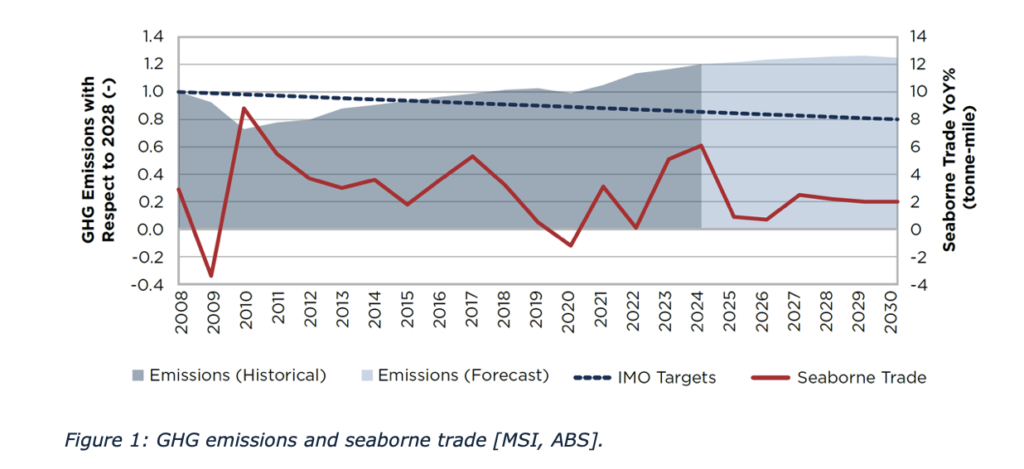
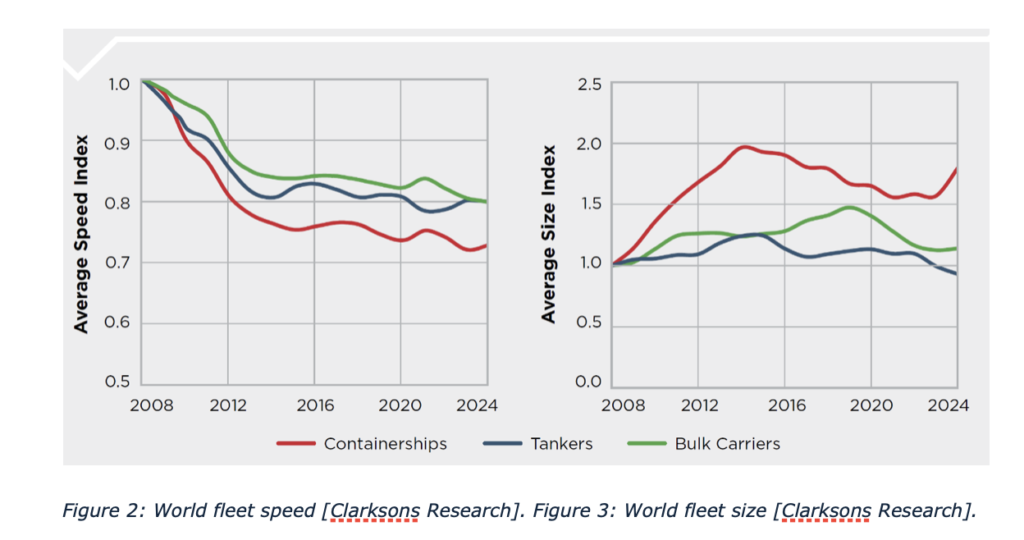
the 2030 emissions targets and in preparing for the steeper GHG reductions required thereafter. Historically, emissions declined between 2008 and 2013 (Figure 1), primarily due to reduced ship speeds following the 2008 global financial crisis (Figure 2), but rose again as trade volumes recovered, only partially offset by further moderate speed reductions.
To date, improvements in carbon intensity have largely been driven by operational measures, such as slow steaming, and market-driven trends leading to an increase in average vessel size (Figure 3), which improves transportation efficiency. However, rising trade volumes, longer voyage durations due to geopolitical disruptions (e.g., Suez Canal blockage, Panama Canal drought), and stagnating improvements in speed and efficiency have pushed net GHG emissions back to exceed 2008 levels.
As ABS notes in Beyond the Horizon: Vision Meets Reality, this underscores the limitations of operational measures and the urgent need for technological measures to decouple emissions from sea-trade dynamics. Regulatory pressure from regional and global air emission legislation is the main catalyst for the increased demand in energy efficiency technologies and onboard carbon capture. While it is generally easier to apply these to new vessels under construction, the long operational life of a vessel, the potential lack of newbuilding capacity and lack of future demand for second-hand vessels may lead to increased demand for retrofits.
Such measures either aim to reduce tank-to-wake (TtW) emissions or well-to-wake emissions. Multiple options are available for each, depending on a range of factors, such as:
• Vessel type and size
• Vessel age (or remaining time in the fleet)
• Operational profile
• Fleet makeup and overall strategy
EET retrofits, such as ducts, propeller modifications or replacement and air lubrication may increase the efficiency of the vessel, reducing fuel consumption and thus TtW emissions. Similarly, wind propulsion technologies (WPS), such as Flettner rotors, suction wings and rigid sails will also reduce the power required for propulsion, leading to TtW emission reductions. Wind Propulsion Technologies (WPT) are a prime example of robust decarbonization technology that is effectively independent from sea-trade
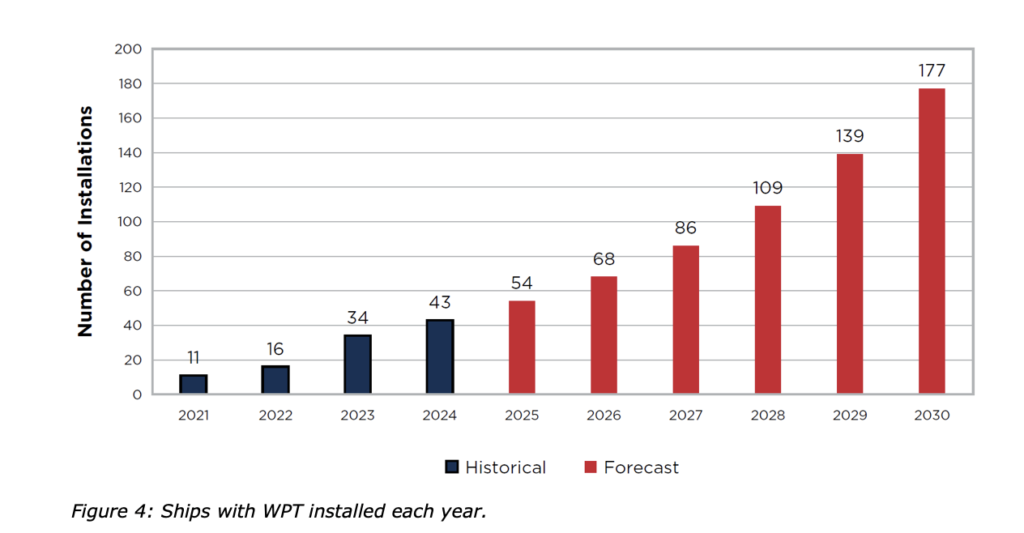
volumes, as it generates no direct emissions, and which also decouples sustainability efforts from the price of green fuels, which are generally available at a premium accounting for their CO2 abatement cost. Consequently, the next five years are forecast to witness a pronounced uptick in WPT installations
(Figure 4).
However, WPT partly shifts dependency of emissions from sea-trade dynamics to factors such as navigation, routing and crew proficiency. For example, wind-assisted propulsion systems can achieve energy savings exceeding 20%, but only when effectively integrated with control algorithms that optimize propeller power by controlling course, speed, and wind-assisted device operating parameters (Guzelbulut, 2025). Without proper integration and operational alignment, their performance may decline considerably. Analogous conclusions hold for hybrid propulsion. Therefore, system integration and optimization are and will be key focus areas in the next five years.
Onboard Carbon Capture and Storage (OCCS), whose application is also expected to grow in the coming years (Figure 5), particularly in mature configurations like amine-based post-combustion and oxyfuel precombustion systems, offers significant potential to decouple greenhouse gas emissions from maritime trade volumes.
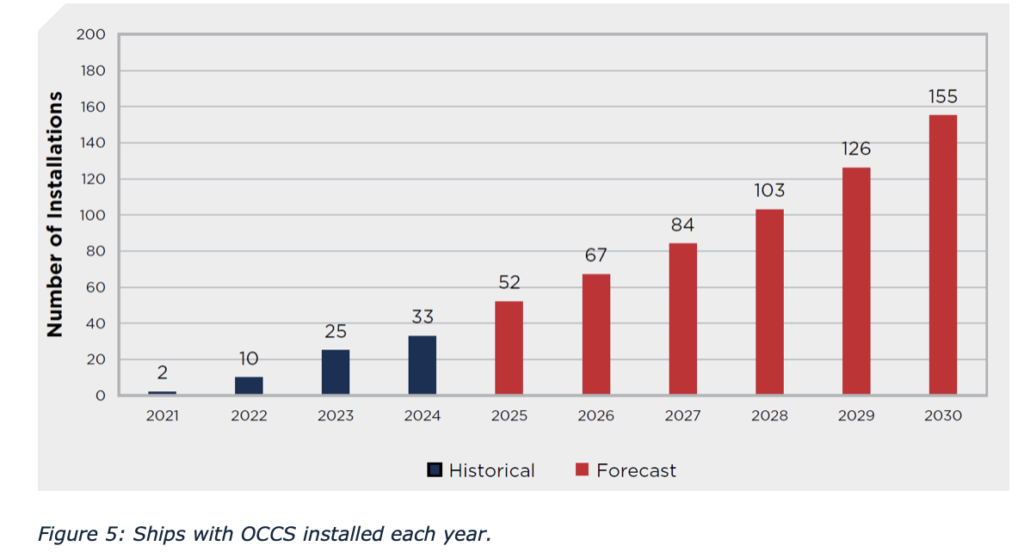
When installed, OCCS should capture the amount of CO2 as per the intended design – either a percent- age of the exhaust gas or its entirety. As with WPT, the effectiveness of OCCS as a mitigation measure hinges on seamless integration and system-level optimization.