

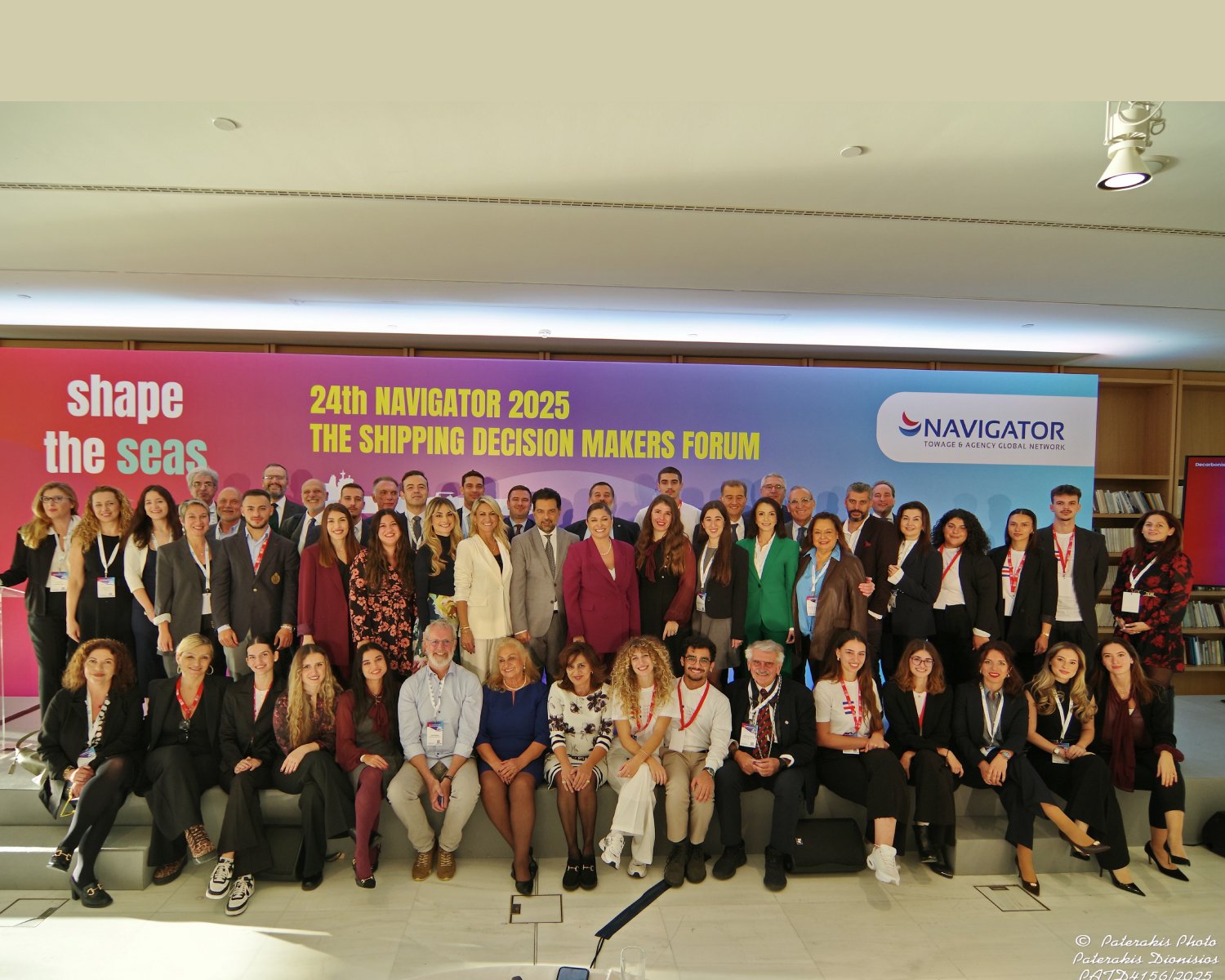
The 24th NAVIGATOR 2025 – The Shipping Decision Makers Forum concluded with remarkable success, bringing together 670 leading shipping executives from 361 companies, alongside representatives from 20 embassies and 41 shipping organizations, academic institutions, and ports. The Forum once again confirmed its position as the strategic compass for the global maritime industry.
The event opened with remarks from Stefanos Gikas, Deputy Minister of Maritime Affairs and Insular Policy, George Alexandratos, President of the Hellenic Chamber of Shipping, and H.E. Fang Qiu, Ambassador of the People’s Republic of China.
H.E. Matthew Lodge, British Ambassador to Greece, joined one of the panels, while Dr. Kyriacos Sabatakakis, Country Managing Director at Accenture, shared groundbreaking research on the application of Artificial Intelligence in shipping.
In the end, Lars Rasmussen, co-creator of Google Maps, addressed the Forum, highlighting the transformative power of digital mapping, AI, and connectivity in navigating maritime and global trade networks.
Throughout the Forum, the leading voices of Greek and international shipping engaged in high-level discussions on decarbonization, smart shipping, ESG integration, human sustainability, and geopolitics. Danae Bezantakou, CEO of Navigator Shipping Consultants, celebrated the enduring spirit of Greek shipping, emphasizing innovation, sustainability, and global collaboration. She highlighted the YES to Schools initiative, which brings maritime education directly to students across Greece, inspiring a new generation to pursue careers at sea and ensuring the legacy of the industry continues to thrive.
Olga Bezantakou, Chief Legal Counsel & COO of NAVIGATOR stated that “Navigator Shipping Consultants proudly represents some of the world’s most reputable towing companies and shipping agencies, operating in over 1,400 commercial ports worldwide with a combined fleet of more than 1,000 tugboats, ensuring top-tier service, operational safety, and competitive rates for Greek shipowners.”
Greece remains a global maritime power and is leading the transition towards a sustainable, safe and competitive shipping, where innovation coexists with people. Investing in green ships, ports and educational structures strengthens both the sector and the cohesion and development of our island societies”, underlined the Minister of Maritime & Insular Policy, Vasileios Kikilias. Deputy Minister of Shipping, Stefanos Gikas, pointed out that the green transition must be realistic and fair, ensuring the competitiveness of shipping while at the same time supporting smaller businesses and encouraging balanced development throughout the country.
The Ambassador of China underscored the strategic significance of China-Greece cooperation in shipping, pointing to sustainable green technologies, digitalization, and smart ports as key drivers for the future. He also noted China’s recent milestones, including the first green methanol bunkering in Shanghai and the launch of the world’s first autonomous research vessel. Dr. Kyriakos Sabatakakis, , emphasized: “Greece has historically been a global leader in shipping — a sector that forms both the foundation of our economy and a core part of our identity. Today, we have the opportunity to lead once again, this time in the new era of artificial intelligence. Connecting the deep expertise of Greek shipping with the capabilities of AI can become a benchmark for the digital reinvention of the industry worldwide.”
The Forum opened with the panel “From Oil to Green: Tradition or Transition?”, which examined the complex realities of maritime decarbonization, where environmental ambition intersects with geopolitical, regulatory, and commercial challenges. Fuel choices are increasingly shaped by national energy policies, taxation frameworks, and evolving IMO and EU regulations, while the slow adaptation of port infrastructure continues to hinder progress. Panelists emphasized that shipping has historically shown a remarkable ability to adapt, innovate, and self-regulate, and that a unified industry voice is essential in engaging policymakers to ensure a sustainable maritime future.
The session “Disruption on Deck: Who Controls the Future of Smart Shipping” explored how connectivity, data, and AI are reshaping operations, from real-time performance monitoring and routing optimization to predictive maintenance and cybersecurity. As vessels become more digital and move toward autonomy, managing cyber-piracy and system vulnerabilities has become as critical as traditional security measures. The panel highlighted that digital adoption is moving from experimentation to tangible operational impact.
In the “ESG as a Strategic Imperative” discussion , experts stressed that ESG has evolved from obligation to strategic opportunity. Environmental, social, and governance principles are now central to corporate identity and competitiveness. Artificial Intelligence enables real-time ESG tracking, while panelists underscored that sustainability begins with leadership and company culture.
The session on “The Human Element Onboard and Ashore: Challenges to Tackle, Solutions to Unlock” reinforced that shipping’s future depends on its people. Issues such as mental health, connectivity at sea, workforce renewal, and generational inclusion were addressed. Panelists stressed the importance of mentorship, clear career pathways, and a culture that values both experience and innovation to retain talent and ensure the sustainability of Greek seafarers.
Finally, the “Sea Power & Global Politics: Who Rules the Shipping Routes?” discussion highlighted that control of the seas is no longer solely a measure of military might but is increasingly defined by resilience and cooperation. Experts warned of hybrid threats, from cyberattacks to the weaponization of trade routes, emphasizing the need for a strategic mindset that combines geopolitical awareness with collaboration between states and the private sector. During the discussion it was noted that, “The era of sea control is giving way to the era of sea resilience,” signaling a profound transformation in the global maritime landscape.
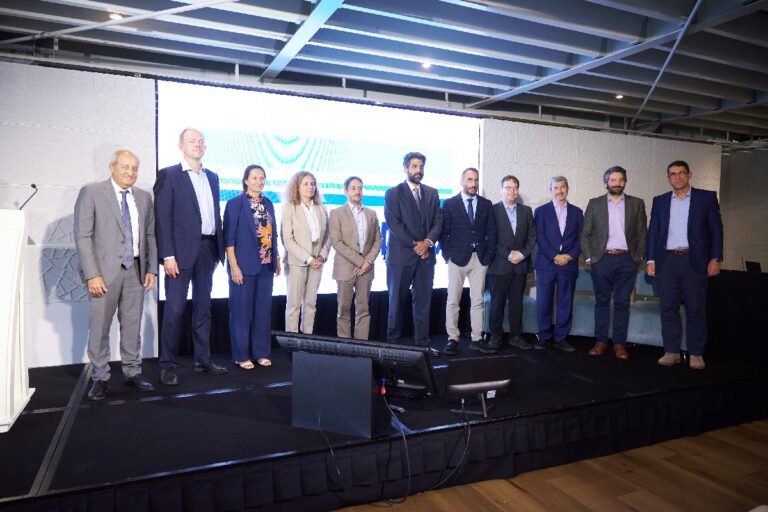
The Forum concluded with a shared vision, by George Tsavliris, Principal – TSAVLIRIS SALVAGE GROUP, Emmanuel Vordonis, Former Chairman – THENAMARIS (SHIPS MANAGEMENT) Inc & Angelos Pantouvakis, Dean. School of Maritime and Industrial Studies – UNIVERSITY of PIRAEUS, that the future of shipping will be green, digital, secure, and human-centered.
Transition is no longer optional—it is an opportunity, and Greece, as a global maritime leader, is uniquely positioned to guide this transformation.